

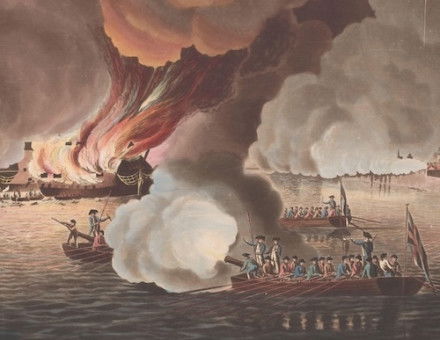
Gibraltar: A Rock and a Hard Place
Since ownership passed from Spain to Britain in 1713, the Rock of Gibraltar has played an ambiguous – sometimes unwelcome role – in British history.
Since ownership passed from Spain to Britain in 1713, the Rock of Gibraltar has played an ambiguous – sometimes unwelcome role – in British history.

C.R. Boxer describes how the Spanish and Portuguese empires were troubled by smugglers and interlopers on the high seas.
Harold Kurtz analyses Spanish predominance in the sixteenth-century West Indies.
Robert W. Kenny describes how, on the death of Elizabeth I, an appeasing spirit entered British diplomacy.
David Chandler describes a heroic episode during the War of the Spanish Succession.
For over 150 years, writes Christopher Duffy, generations of Irish gentry sought service in the armies of the European powers.
H.T. Dickinson profiles a polished, intrepid and versatile military man; Peterborough was one of the most dashing soldiers who fought in the War of the Spanish Succession.
During the years when France rose to predominance in Europe, writes J.H. Elliott, the Spanish Empire was governed by a man capable of gigantic designs, but lacking felicity in their outcome.
Townsend Miller describes the union of the crowns of Castile and Aragon, issued in Spain’s greatest century and accomplished amid civil war and in spite of foreign intervention.
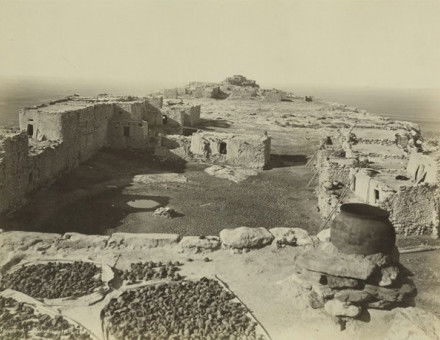
One of the strangest episodes in the Spanish conquest of the New World was the quest for the mythical Seven Cities, first believed to stand on a mysterious island far out in the Atlantic Ocean, afterwards magically transported to the depths of America.